Skip to content
Critical thinking · Research · Argument · 2027 preparation

John Locke Essay Competition

Big questions.
Independent minds.

Aiming for a global top 30 university? Go beyond the school syllabus. Build an argument that is worth listening to.

Aim higher. Go deeper. Make your work count.

An ambitious writing target

A global challenge.
An original point of view.

Judged by academics from leading universities including Oxford, Cambridge, Harvard, Princeton and Stanford.

An official John Locke Institute competition event
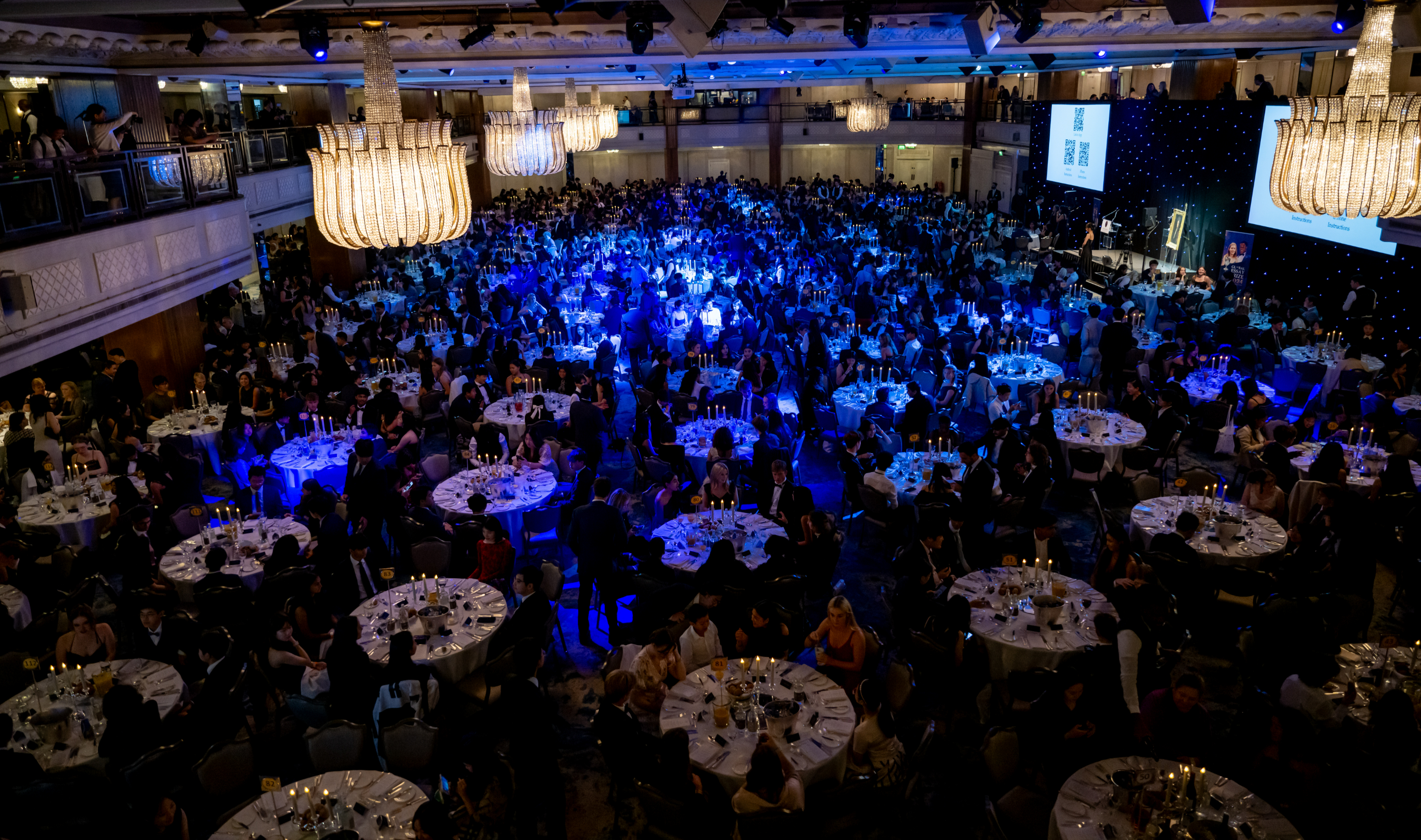
John Locke Institute event · organiser image

What is John Locke?

John Locke Essay Competition

The John Locke Institute invites students worldwide to answer demanding academic questions. Its 2026 Global Essay Prize spans ten subject categories, with separate junior and senior judging.

A good answer is only the beginning. Explain your reasoning, test it against the strongest objection and show what you think for yourself.

Explore the official competition ↗

Why ACE? · Our 2026 John Locke cohort

Three Year 8 students.
Every student awarded.

Start your own challenge →
A HIGHER TARGET. A REAL ACHIEVEMENT.

Start young.
Think beyond your year.

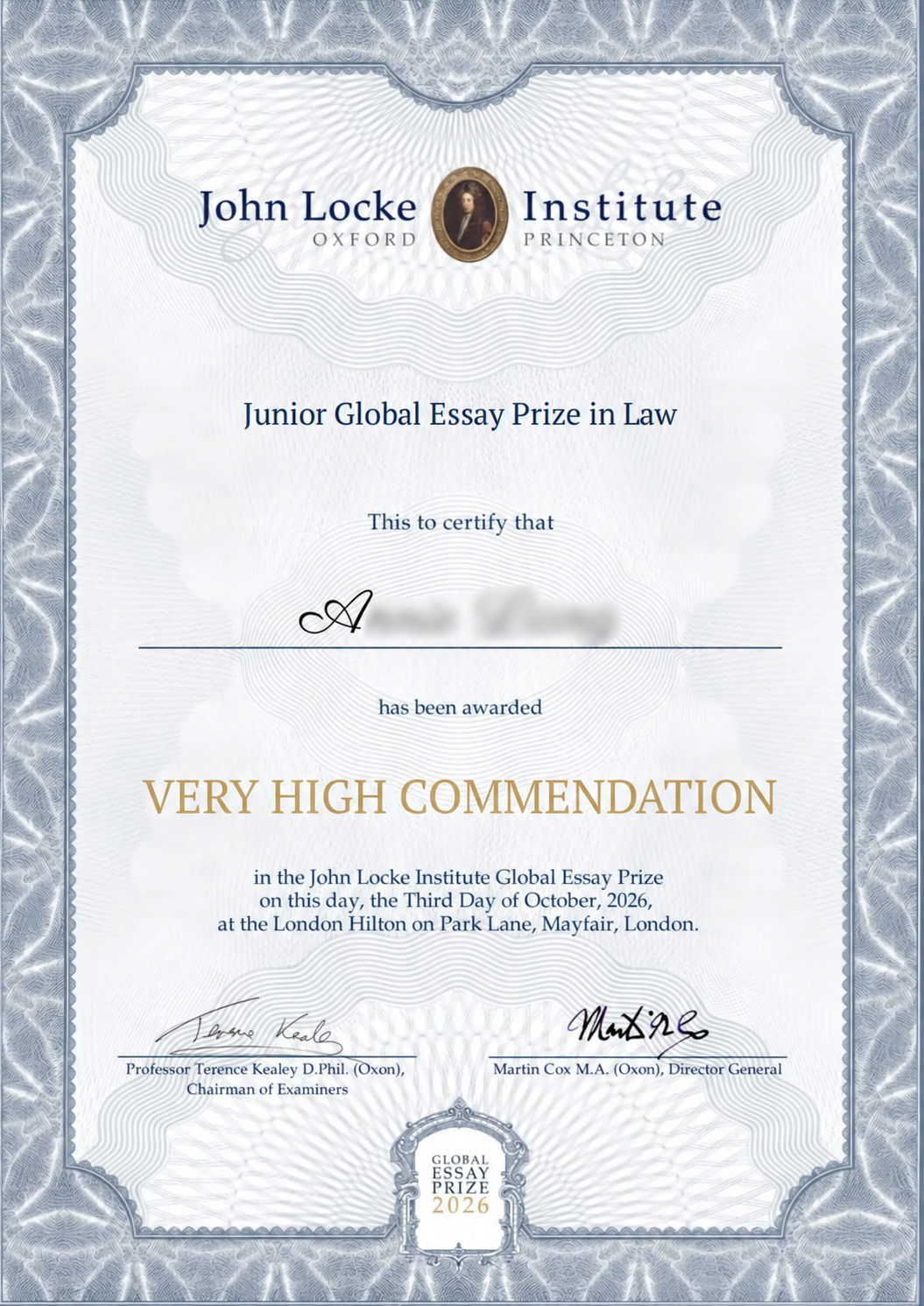
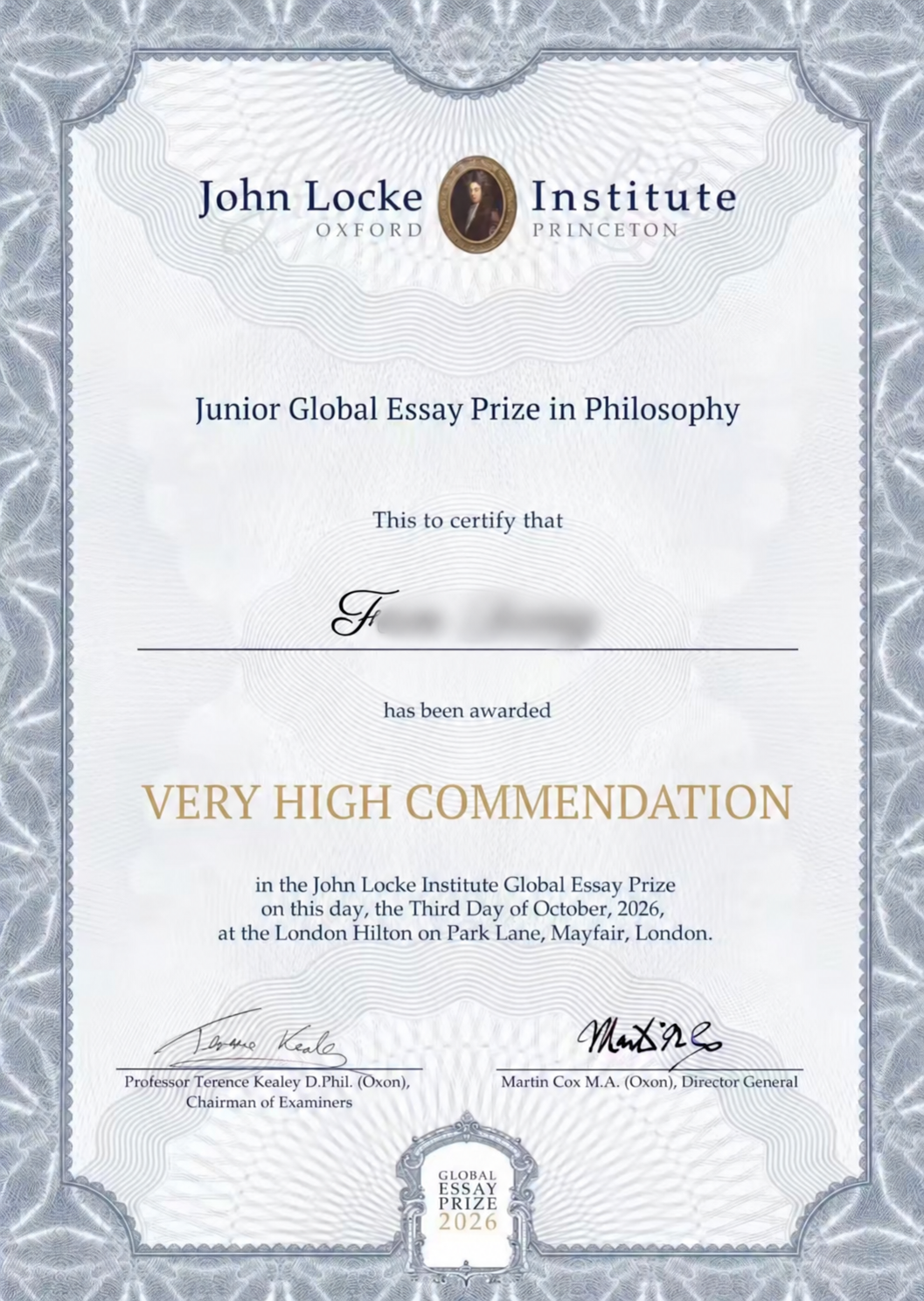
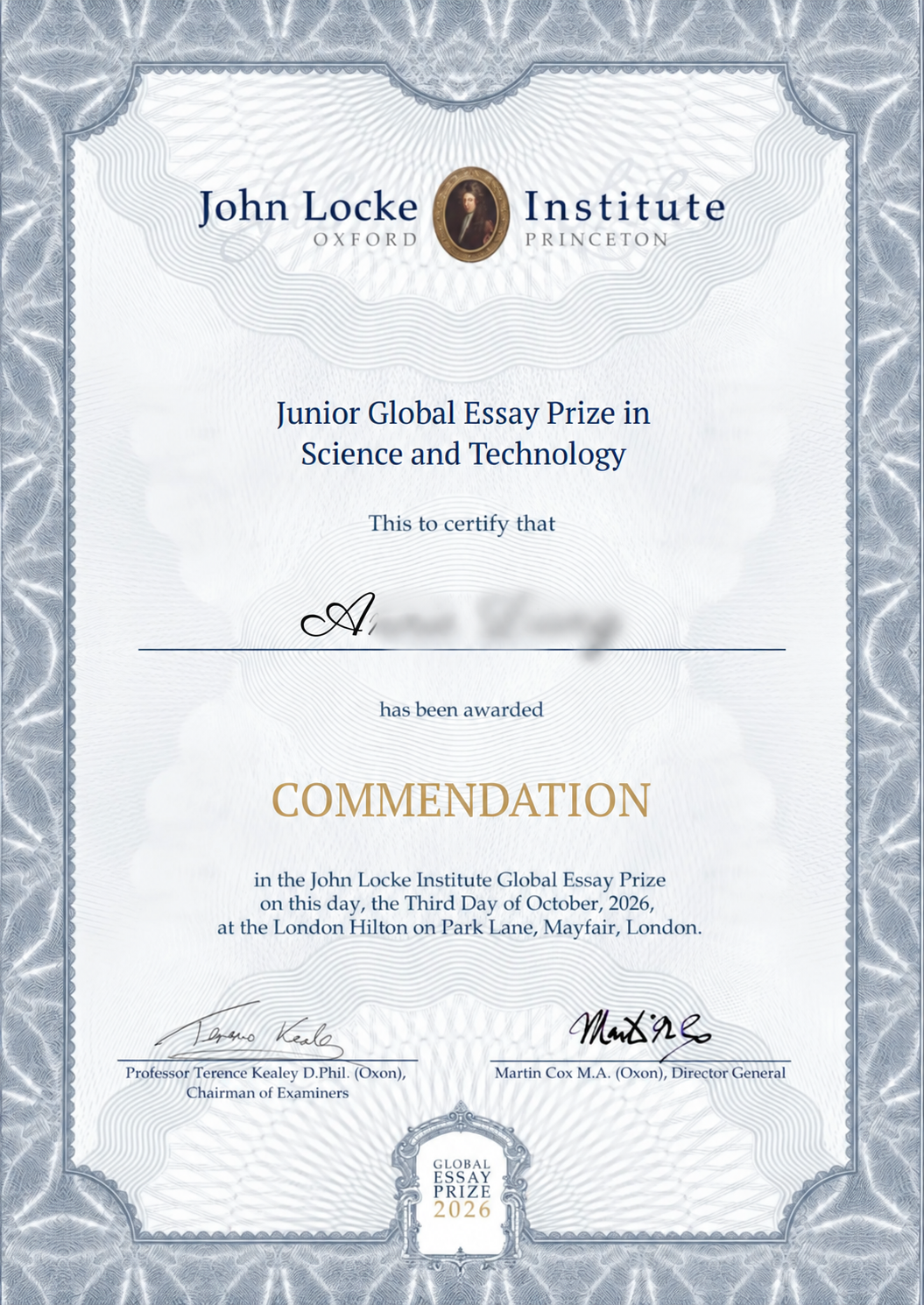
All three Year 8 students in our 2026 John Locke cohort received an award.

Focused reading. Independent arguments.
The commitment to revise.

3 studentsAll in Year 8
100%received an award
2026John Locke cohort
Student A: Law, Very High Commendation, John Locke Junior Global Essay Prize 2026. Name blurred.
Student A · LawVery High Commendation
Student F: Philosophy, Very High Commendation, John Locke Junior Global Essay Prize 2026. Name blurred.
Student F · PhilosophyVery High Commendation
Student A: Science and Technology, Commendation, John Locke Junior Global Essay Prize 2026. Name blurred.
Student A · Science and TechnologyCommendation

Two formats. Real teacher support.

Choose how you get there.

Learn at your own pace with personal feedback and accountability, or let a teacher guide you through the entire programme.

Flexibility + personal guidance

Supported self-paced

A$79820 lessons
3 one-to-one feedback sessions

  • Your pace, a clear plan. Follow the complete 20-lesson pathway.
  • Three one-to-one teacher reviews. At the outline, first-draft and final-draft milestones.
  • Guided reading. Complete reading analyses and summaries alongside your research.
  • Human oversight every lesson. Homework and reading-summary completion are checked to keep you moving.
1:1Outline1:1First draft1:1Final draft
Choose supported self-paced
Teacher-led throughout · starts November

Live Zoom small group

A$1,99820 live sessions
4 students per group

  • A teacher at every stage. Guided reading, research, discussion and writing.
  • A four-student group. More room to question, discuss and explain your thinking.
  • 20 × 90-minute sessions. A structured 20-week programme starting in November 2026.
  • Detailed manuscript feedback. Three written full-draft reviews and a clear revision plan.
Teacher-ledRead → Research → Draft → RefineGuidance from the first question to the final manuscript.
Join the November intake

20 weeks. Four clear milestones.

See exactly what you will complete.

Original course framework (PDF) ↓

Choose a stage to explore its lessons, or view the entire course. The syllabus shows the full teacher-led pathway; supported self-paced includes three one-to-one reviews at the outline, first draft and final draft.

All 20 lessons · four stages of five weeks

John Locke Essay Competition: 20 lessons and student deliverables
LessonWhat you learnStudent deliverable · what you complete
STAGE 1Foundations5 lessons · Practice essay & portfolio
01Competition Orientation & DiagnosisAssess writing, select a subject pathway and check eligibility, registration and referee needs.
300-word diagnostic and individual preparation plan
02Reading the Question PreciselyDefine contested terms, identify the burden of proof and separate factual from value claims.
Two question analyses and a definitions sheet
03Logic, Assumptions & InferenceTest premises and conclusions; identify hidden assumptions, weak analogies and invalid inferences.
Argument map and two repaired analytical paragraphs
04Learning from Strong EssaysStudy published entries for direct answers, intellectual independence and effective objections.
Two model-essay analyses and a quality checklist
05Practice Essay & Foundation ReviewWrite a short response to a past question and evaluate clarity, evidence and reasoning.
600-word practice essay and Stage 1 progress report
STAGE 2Research design5 lessons · Research proposal & outline
06Official Question SelectionCompare current questions for interest, scope and research access; use past prompts until release.
Question comparison and provisional or confirmed selection
07Reading for Competing PositionsUse scholarly sources to compare the most credible answers rather than collect supporting quotes.
Annotated reading dossier and positions matrix
08Developing an Independent ThesisState a qualified answer and distinguish its reasoning from familiar responses.
Working thesis and claim-evidence map
09The Strongest ObjectionPresent an opposing view fairly; test counterexamples, assumptions and boundary cases.
Objection-response matrix and revised thesis
10Research Proposal & OutlineDefend the chosen question, research base and structure; allocate the word budget.
500-word question brief, detailed outline and Stage 2 reportSELF-PACED 1:1 · OUTLINE
STAGE 3First draft5 lessons · Complete essay & first review
11Drafting the Core ArgumentWrite the main analytical sections and connect each inference to evidence or reasoning.
First half of the essay with traceable references
12Drafting Objections & RepliesIntegrate the strongest challenge and explain why the central answer survives or changes.
Counterargument section and remaining body draft
13Opening and Concluding DirectlyFrame the precise problem; conclude with an answer, implications and appropriate limits.
Introduction, conclusion and linked section transitions
14Assembling the Complete DraftCheck the full argument, source use, paragraph purpose and word allocation.
Complete first draft and student self-assessmentSELF-PACED 1:1 · FIRST DRAFT
15Full Review I: Argument and StructureDiscuss tutor feedback on logic, relevance and the strongest objection; prioritise rewrites.
Written review, revision plan and Stage 3 progress reportLIVE ZOOM · WRITTEN FULL REVIEW
STAGE 4Refine & submit5 lessons · Final essay & entry package
16Targeted Research & RewritingResolve the most important evidential or conceptual gap and reconstruct weak sections.
Rewritten sections and updated source dossier
17Full Review II: Originality and DepthTest whether the essay adds a defensible insight and fairly handles alternative positions.
Second written review, revised draft and response logLIVE ZOOM · WRITTEN FULL REVIEW
18Precision, Style & Word EconomyRemove repetition, sharpen definitions and refine sentences within the confirmed limit.
Student-edited manuscript and word-count record
19Full Review III: Sources and RulesAudit quotations and claims; check anonymity, PDF naming, references and authorship records.
Third written review and checked final candidateLIVE ZOOM · WRITTEN FULL REVIEW
20Defending and Finalising the EssayExplain the reasoning aloud; complete final corrections and registration/referee checks.
Final essay, submission checklist and Stage 4 progress reportSELF-PACED 1:1 · FINAL DRAFT

Every lesson ends with work you can show. Complete the task and reading summary. Get a progress report at each stage.

Choose your support →

Why prepare with ACE Achievers?

Ambition needs a system.
And people behind you.

01

Designed and taught by educators from leading universities.

Learn to read critically, ask sharper questions and explain a defensible argument.

01Read closely02Question assumptions03Defend your thinking

Start from November 2026

Make this your next challenge.

Choose the rhythm that works for you. Keep the same ambitious target.

John Locke course formats, timing, teacher support and price
Your courseWhen & howTeacher supportCourse feeNext step
Supported self-paced20 online lessonsStudy at your paceAccess arrangements confirmed at enrolment3 one-to-one reviewsPlus lesson-task and reading-summary checksA$798Choose self-paced
Teacher-led Zoom4 students per groupNovember 2026 intake20 × 90 minutes · 20 weeksGuidance throughoutLive teaching, discussion and manuscript feedbackA$1,998Join November

Zoom session dates, times and time zone will be confirmed with your group. Independent study: 5–7 hours a week; 7–9 during full-draft revision.

Planning your entryEligibility, dates and the final submission

Who & what

The 2026 baseline is a maximum of 2,000 counted words per essay, excluding specified supporting material. Submit an anonymous PDF with the required filename and provide an academic referee. Junior entrants are under 15 on 31 May.

Students develop and write their own answers. Keep a research and assistance record and be ready to explain the argument aloud.

Your next competition cycle

2026 registration and submission have closed. 2027 questions and dates are not yet confirmed. Begin foundations now; move to the new questions after their official release.

Official rules & entry information ↗

Information checked 5 October 2026. Use the new cycle’s confirmed rules for your final entry.

Before you begin

Your questions,
answered.

What does supported self-paced include?

20 lessons, guided reading, human checks of lesson tasks and reading summaries, and three one-to-one teacher feedback sessions at the outline, first draft and final draft. A$798.

How does the live Zoom course work?

Four students, 20 weekly sessions of 90 minutes, teacher guidance throughout, three written full-work reviews and four stage progress reports. A$1,998. Starts from November 2026; exact group dates and times are confirmed before payment.

What will I complete?

An independent competition essay, research dossier, reading portfolio and submission checklist.

How much independent study is expected?

5–7 hours a week; 7–9 during full-draft revision.

Which competition cycle will I enter?

2026 registration and submission have closed. 2027 questions and dates are not yet confirmed. Begin foundations now; move to the new questions after their official release.

How is original student work protected?

Students develop and write their own answers. Keep a research and assistance record and be ready to explain the argument aloud.

What happens after I request enrolment?

We discuss readiness and confirm the teaching arrangements before payment. Course fees cover ACE teaching and support. Any organiser charges are separate. Awards and university admission decisions remain with the relevant institutions.

A bigger goal starts here

Take your ambition
seriously.

Choose your course. Bring your curiosity.
Start building work you can be proud of.

Supported self-paced A$798Teacher-led Zoom A$1,998

Request enrolment now. We’ll confirm arrangements before payment.

Take the next step

ACE Achievers is an independent education provider. Students complete their own research and writing. Organiser names and imagery identify the competition. ACE Achievers is not affiliated with or endorsed by the organiser.
Explore the writing competition calendar →